Behaviour Curriculum
At Cirencester Primary School and Nursery, we believe that all behaviour is a form of communication. Children learn best when they feel happy, safe, and emotionally supported, and helping them to regulate their emotions is a key part of this.
As a school, we have identified a few areas we would like to strengthen to better support all children:
- Children are still developing the language and vocabulary needed to understand and express their emotions.
- Strategies to help manage emotions are not yet consistently taught or embedded, meaning children can sometimes rely on adult support rather than developing independence.
- Unstructured times, such as lunchtime, can make it harder for some children to settle, which can affect their focus and engagement in learning.
- At times, different adult responses to emotional situations can be confusing for children and make it harder for them to develop consistent strategies.
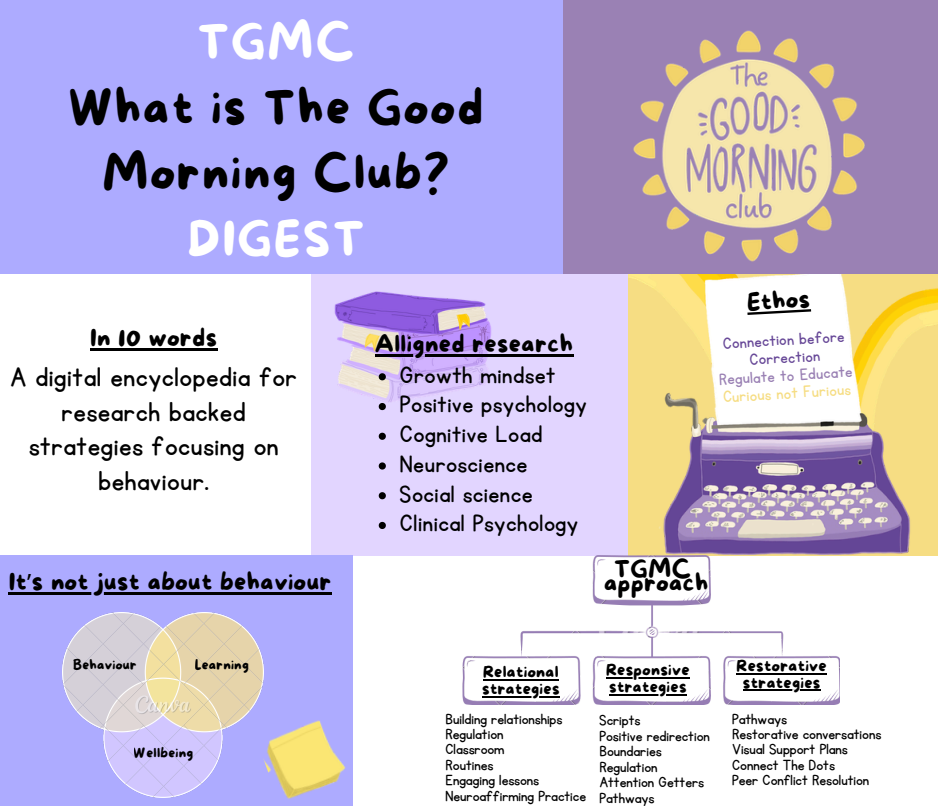
In response to this, we are introducing a new whole-school approach called The Good Morning Club (TGMC). This programme is designed to support both children and adults in developing positive emotional wellbeing and creating a calm, supportive learning environment.
TGMC focuses on three key areas:
- Emotional literacy (understanding and talking about feelings).
- Engagement (supporting children to feel ready to learn).
- Co-regulation (how adults support children in managing emotions).
This will be introduced gradually over the next three years and will become part of daily school life, including classroom learning, routines and individual support strategies.
As a first step, we will focus on building strong foundations through our life skills curriculum. Before children can use strategies to regulate their emotions, it is important that they understand how their emotions, brain, and body work.
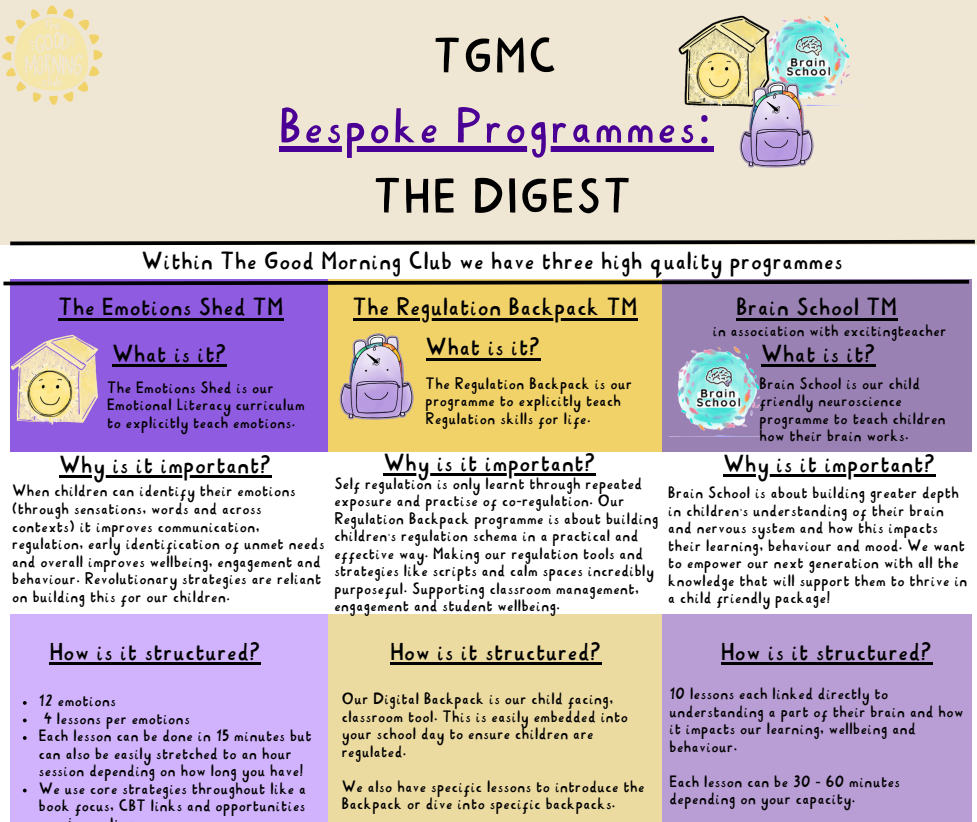
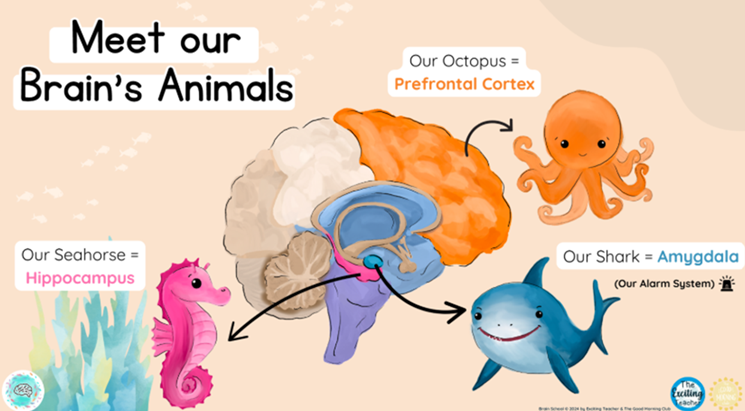
In Summer Term 1 2026, all year groups will take part in The Brain School. This programme helps children develop an understanding of how their brain and nervous system influence their learning, behaviour, and feelings. It is designed to give children the knowledge they need to thrive, in a fun and age-appropriate way.
In Summer Term 2 2026, children will begin learning parts of the Emotions Shed curriculum. This programme explicitly teaches children about emotions. By learning to recognise and name feelings, children can communicate more effectively, regulate themselves more successfully, and better understand their own needs. Initially, we will focus on the emotions of happiness, worry, anger, and pride.
Introducing these programmes in the summer term will help prepare children for the next stage of TGMC. In the autumn term 2026/27, we will begin teaching a set of core regulation strategies, building on the strong foundation established this year.
We look forward to inviting parents and carers to introductory sessions about TGMC in the Autumn Term 2026/27.